
How to Improve Emotional Intelligence in Kids
We often hear the saying, “kids are pure-hearted,” and it’s true. However, it’s also true that kids’ minds are as tender as they are pure. Naturally, when it comes to raising children, most of us think about academics, sports, or creative skills. But one ability that’s often overlooked, yet crucial, is emotional intelligence. EI is based on understanding and managing emotions, both our own and those of others. According to many experts, for children, emotional intelligence lays the foundation for strong relationships, empathy, and success not only in school but also in life.
So, in this blog, we will explore simple ways to improve emotional intelligence in children, along with why it is important. We will also share with you some practical strategies that will help in developing your children’s emotional intelligence. But first, let’s know what emotional intelligence is:
What Is Emotional Intelligence?
Simply put, emotional intelligence is the ability to recognize, understand, and manage our own emotions, as well as to recognize and respond to the emotions of others. It focuses on feelings, empathy, and relationships. Whereas emotional intelligence in kids means the ability to:
- Recognize their own feelings
- Understand why they feel that way
- Express emotions appropriately
- Recognize others’ emotions
- Respond with empathy and care
Many psychologists explain emotional intelligence through five key components: self-awareness, self-regulation, motivation, empathy, and social skills. Together, these abilities help individuals understand emotions, control their reactions, stay motivated, connect with others, and develop strong relationship skills, which are essential for children as well as adults.
- Self-awareness
- Self-regulation
- Motivation
- Empathy
- Social skills
How to Improve Emotional Intelligence in Kids
Now the question arises: how to introduce children to emotional intelligence and how to develop this ability in them. Let’s move on to learn how to develop emotional intelligence in kids.
Teach the Language of Emotions
Kids’ expressions tell us how they are feeling. Whether they are angry, happy, sad, or super excited about anything, they can’t express themselves clearly with words. Therefore, it’s crucial for us as parents to understand their facial expressions and body language. By paying attention to these small cues, we can understand them and guide them in expressing their emotions appropriately, gradually helping them develop the ability to express their feelings clearly.
Be an example yourself
We all know that kids learn from what they see around them. Therefore, it’s crucial to maintain a balanced behaviour around them. For example, if parents are constantly angry, their kids will likely learn the same. Therefore, demonstrate to children how to manage their emotions and set an example. Whatever they see you doing, they will likely do the same. Think of it this way: if you’re feeling angry, instead of expressing it negatively, tell them, “I’m just a little upset right now, so I’ll take a deep breath and calm down.” Through small practices like these, you can impart significant lessons to your kids.
Teach Empathy
It’s important to teach children empathy as they grow up. This is when children meet their classmates and friendships begin. Explain empathy to them through examples. For example, ask children, “How would your friend feel if his toy were taken away?” This way, they will understand the pain of others, and this helps them understand their feelings.
Teach Problem Solving
When your child brings up any problem, instead of scolding them, explain it to them and offer a way out. For example, if your child breaks a neighbour’s plant, make them realize their mistake. Also, tell them that it’s their mistake and they should apologize. Let them do this on their own.
Teach them to value emotions
Happiness and sadness are inevitable in life, and young children never know when something might upset them or bring tears to their eyes. In such a situation, explain to children that if a friend is crying in front of them, console them and try not to make fun of them. Try to understand their grief.
Games and Activities
It’s often said that children learn a lot through play. Emotions can also be taught through games, such as Emotion Charades. In this game, children will have to act out their emotions. This game will not only enhance their emotional intelligence but also instill a sense of team spirit.
Books
Books are children’s best friends. They easily understand even complex things by reading them. However, you need to be mindful of the types of books they read. Try to provide them with books where characters express emotions. While reading, ask, “How do you think this character is feeling right now?” Such books will help them understand real-life experiences.
A habit of writing
Give words to your kid’s expressions. By giving words to their expressions, whether it’s joy, anger, fear, or excitement, we help them understand what they are truly feeling. One of the best ways to do this is by allowing kids to express their emotions in a diary, through drawing, or even writing short stories. Writing creates a safe space for them to explore feelings and gradually improves emotional intelligence, making them more confident, empathetic, and expressive individuals.
Tips for Parents
Here, we need to understand that developing emotional intelligence in kids isn’t a one-day task. It’s a gradual process of learning and practice, in which parents play a key role. Kids first learn to understand and express emotions at home. Let’s explore how small changes in everyday life can make your little one emotionally stronger.
Be patient, it takes time
Emotional intelligence isn’t a mathematical formula that can be learned instantly. Every child is different and learns at their own pace. Sometimes a child will express their feelings immediately, while other times they will remain silent and take time. In such situations, parents should be patient and understand that children need time to learn and understand. Repeatedly interrupting or rushing can lead to children hiding their emotions.
Let kids speak freely
Parents often inadvertently restrain their children—saying, “Be quiet, don’t talk too much,” or “It’s no big deal.” This habit creates fear and hesitation in children. Allow children to share their feelings openly, even if it’s a small matter. When a child feels listened to, their confidence grows, and they learn to express their feelings in the right words.
Praise your kid’s efforts
We often celebrate children’s successes but criticize failures. In fact, it’s important to teach children that hard work and effort are just as important as results. When you praise a child’s hard work, You did a great job, I’m proud of you,” the child will be motivated to learn and try again, rather than fearing failure. This positive thinking will become the foundation of their emotional strength.
Limit screen time
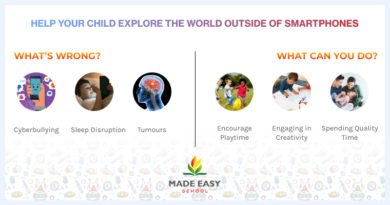
Mobile phones, TVs, and tablets have become a major part of children’s lives these days. However, excessive screen time reduces children’s true emotional understanding and social connection. Children are busy in the virtual world, but they lag behind in real-life communication and empathy. Parents should limit screen time and encourage children to spend time with family, play with friends, and engage in outdoor activities.
Conduct a daily “emotional check-in”
A very simple and effective way is to ask your child a question every day, “How are you feeling today? Or how’s your day today? This simple question prompts the child to reflect on their feelings throughout the day. This habit also promotes deeper family conversations and emotional bonding.
Benefits of Emotional Intelligence
Developing emotional intelligence in kids isn’t limited to childhood. It lays the foundation for their entire lives. Children who understand their emotions and connect with others are more resilient to life’s challenges. Let’s take a closer look at how this benefits them in the long run.
Kids Cope with Stress Better
Everyone faces ups and downs in life. Exam pressure at school, conflicts with friends, or losing a game, these can all be stressful for kids. If they have developed emotional intelligence, they don’t see defeat or failure as the end. They learn that even failure is an opportunity to learn. Deep breathing, positive thinking, and self-restraint are small skills that help them manage stress. As adults, these habits enable them to deal with career challenges and relationship complexities.
They Make Good Friends
Childhood friendships leave the deepest mark on a person’s life. Emotionally intelligent children not only make good friends but also know how to nurture those relationships. They understand when a friend needs help, when they just need someone to listen, and when they need encouragement. Such children resolve conflicts quickly and enjoy working in groups. This skill makes them good spouses, colleagues, and team players in the future.
Perform Better in Studies and Career
Emotional intelligence is important not only for relationships but also for studies and a career. When a child learns to manage their stress, they are able to focus more on their studies. They try to find solutions instead of being overwhelmed by challenges. This ability also helps them in their professional life as they grow older. An emotionally balanced person can focus on work without being influenced by office politics. Such people also prove to be better at teamwork, leadership, and decision-making.
Becomes Kind and Understanding
Every society needs leaders who are not only intelligent but also compassionate. Children with emotional intelligence grow up to embody these qualities. They understand the feelings of others and value empathy when making decisions. Whether it’s leading a team or bringing positive change to a community, such people can inspire and connect with others.
Developing emotional intelligence in children isn’t just an additional skill, but a vital foundation for life. When we teach them to recognize and express their own emotions and understand the emotions of others, we strengthen them for life. This ability not only makes their childhood comfortable and happy but also helps them become confident, sensitive, and successful individuals in the future. It’s crucial to understand that true success lies not in educating children, but in making them intelligent at heart.
FAQs
Question: What are the 5 C’s of emotional intelligence?
Ans: The five C’s of emotional intelligence are mentioned below:
- Consciousness (Self-awareness): Knowing your own feelings.
- Control (Self-regulation): Managing emotions in healthy ways.
- Commitment (Motivation): Staying positive.
- Compassion (Empathy): Understanding how others feel.
- Connection (Social skills): Building and keeping good relationships.
Question: What causes low emotional intelligence?
Ans: Low emotional intelligence can come from:
- Lack of emotional guidance in childhood.
- Suppressing or ignoring feelings.
- Too much stress or trauma.
- Limited social interaction.
- Over-dependence on screens instead of real conversations.
Question: How do you raise an emotionally intelligent child?
Ans: Here we have mentioned the steps to follow while teaching kids about emotional intelligence:
- Be a role model, show how you handle your emotions.
- Listen patiently and validate their feelings.
- Encourage problem-solving instead of punishing.
- Praise effort, not just success.
- Do regular “emotional check-ins.”
Question: What activities can improve emotional intelligence in kids?
Ans: Here, we have mentioned a few activities that you can use for kids:
- Emotion charades: Act out feelings for others to guess.
- Storytelling: Pause and ask, How do you think the character feels?
- Group games: Encourage cooperation and turn-taking.
Question: At what age should emotional intelligence development begin?
Ans: As per many experts, emotional intelligence development starts as early as toddler age (2–3 years). As they grow, you can slowly teach them more complex emotions, empathy, and social skills.